Om Shanti Om: Sometimes, the Journey Matters More Than the Destination
“Instead of a mic, he held a comb, and instead of an award, a bottle.”
If you have watched Om Shanti Om, chances are you remember this scene.
Om Prakash Makhija, played by Shah Rukh Khan, stands in front of a mirror and imagines himself as a big Bollywood star. There is no real microphone in his hand, no award and no crowd cheering for him. There is just a comb, a bottle and a dream.
And somehow, that little scene says a lot about dreams.
We often think dreams begin when we have the resources, the right people or the perfect opportunity. But most dreams actually begin much earlier. They begin quietly, when nobody is watching.
That is what makes Om’s character so relatable.
A Boy Who Wanted to Become a Hero
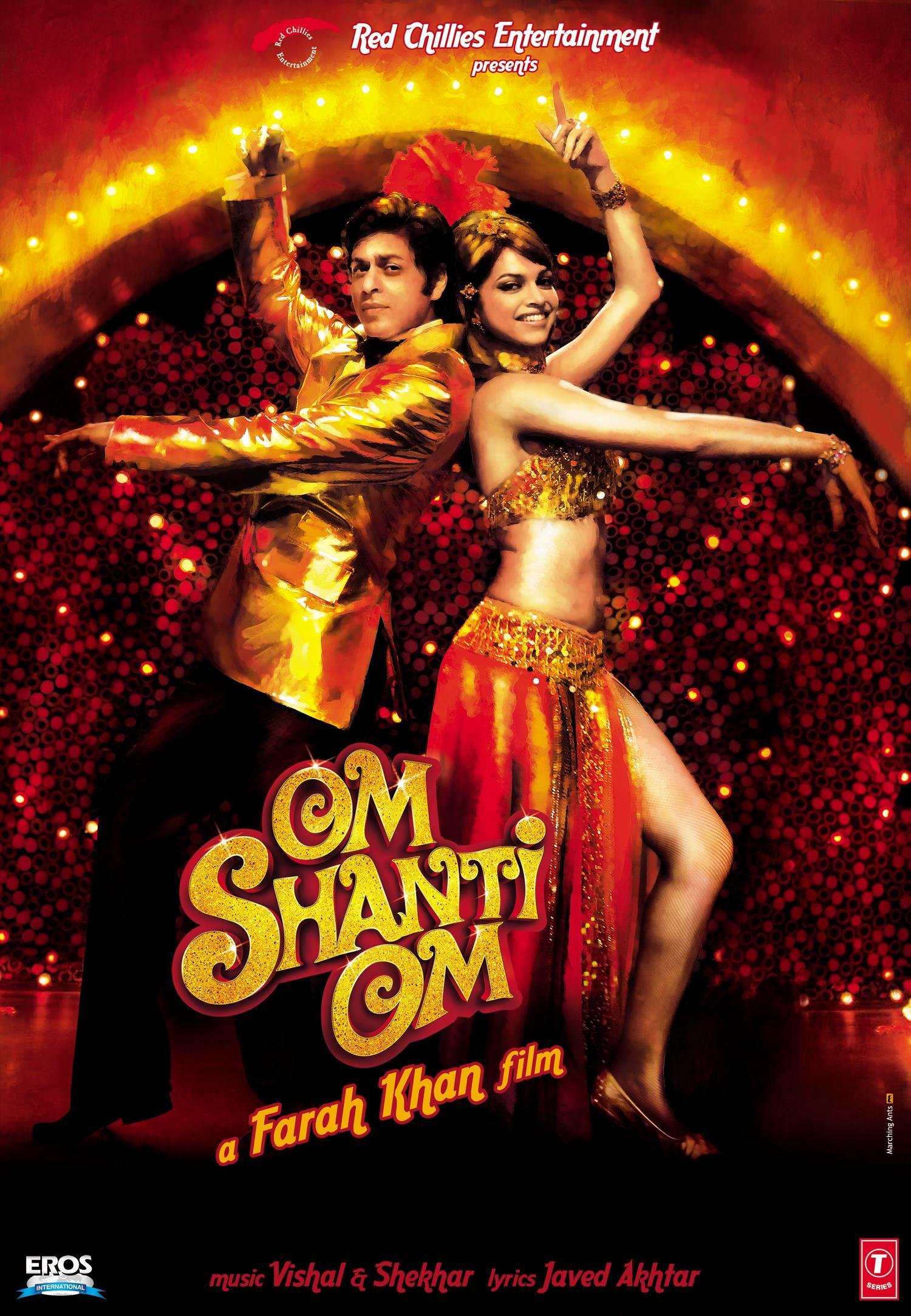
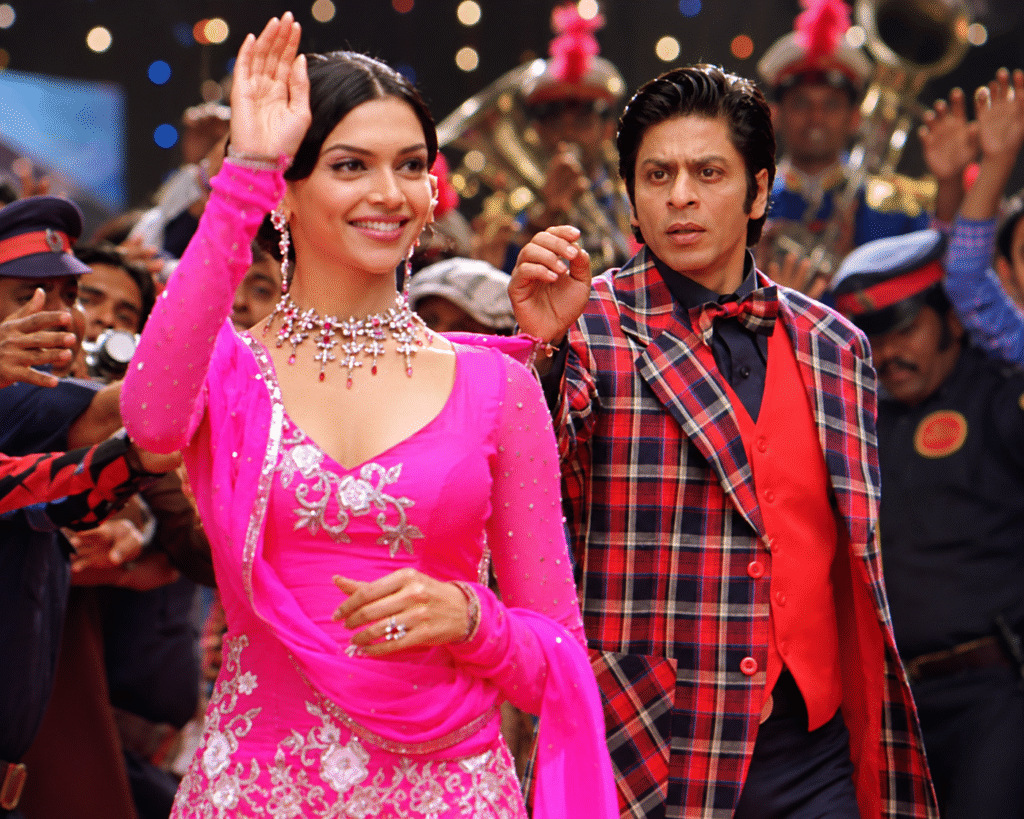
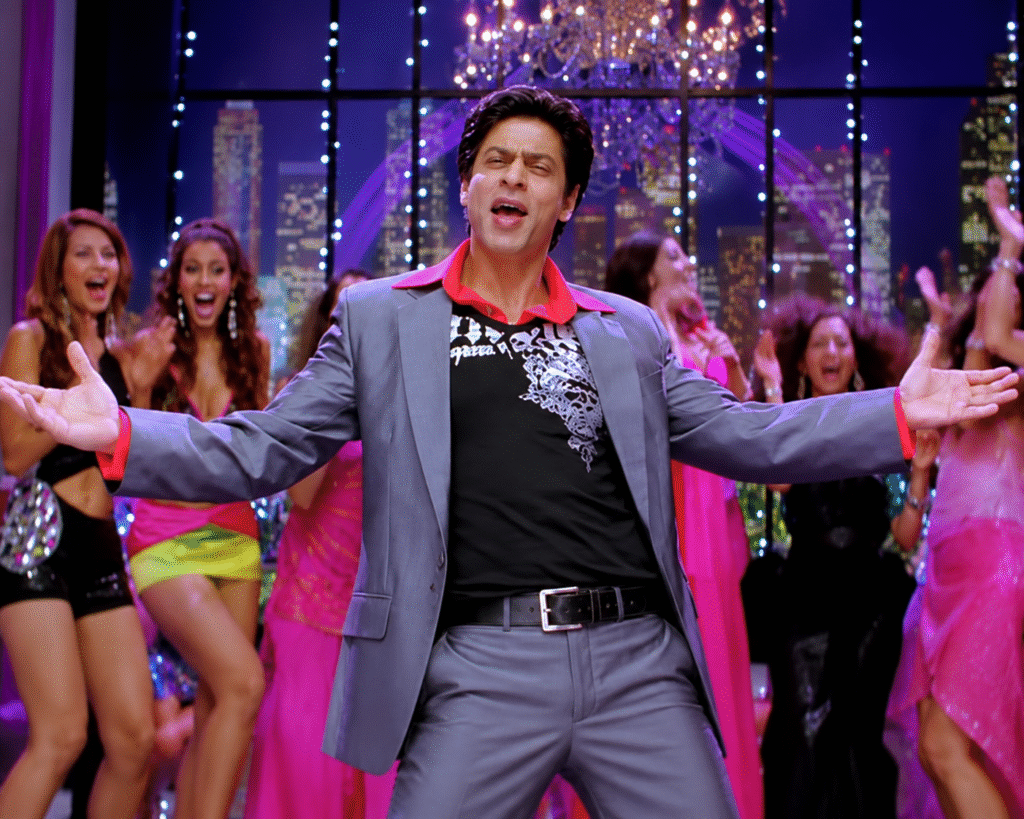
Released in 2007 and directed by Farah Khan, Om Shanti Om is, on the surface, a classic Bollywood entertainer. It has romance, comedy, music, drama, reincarnation, and plenty of old-school Bollywood glamour.
But at its heart is Om, a junior artist who wants to become a hero.
He is not the most successful person in the room. He doesn’t have the kind of connections that can instantly change his life. He is simply someone who believes that he can become more than what he is at that moment.
That is why the mirror scene feels so real.
Most people who have chased a dream have had their own version of that mirror.
Maybe it was someone practicing a speech alone in their room.
Maybe it was a person learning a skill late at night after work.
Maybe it was someone planning a business on a piece of paper while everyone around them thought it was unrealistic.
The dream may look small from the outside. But to the person carrying it, it means everything.
“Kehte Hain Agar Kisi Cheez Ko Dil Se Chaho…”
Then comes the dialogue that has stayed with audiences for years:
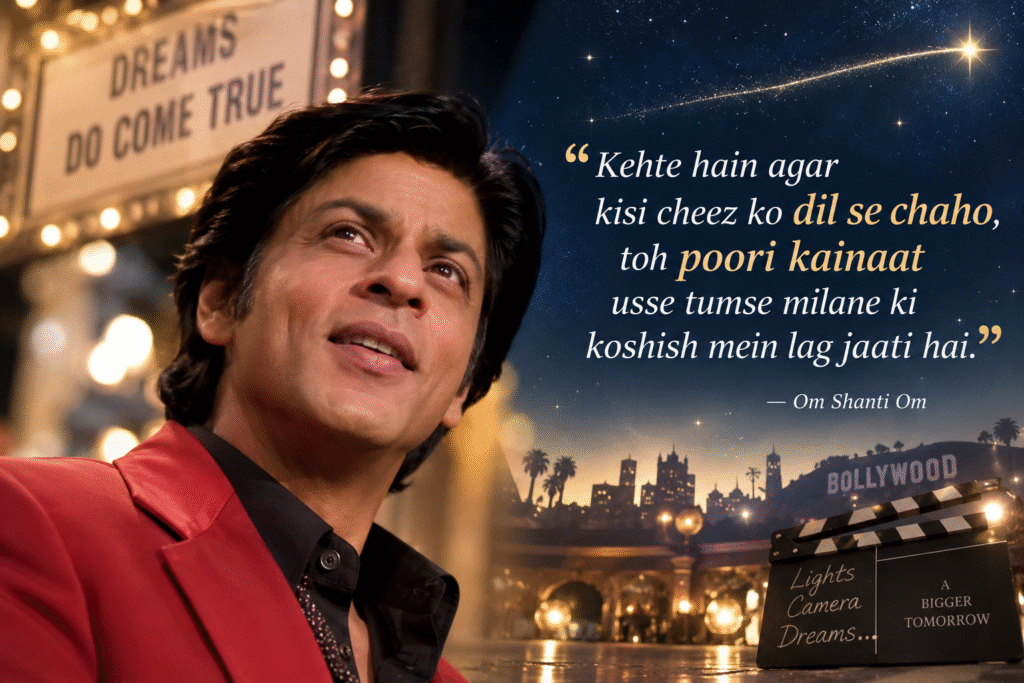
“Kehte hain agar kisi cheez ko dil se chaho, toh poori kainaat usse tumse milane ki koshish mein lag jaati hai.”
It is probably one of the most quoted Bollywood dialogues when it comes to dreams and ambition.
But if we think about it realistically, the line isn’t really saying that simply wishing for something will make it happen.
Life doesn’t work that way.
You can want something desperately and still not get it.
You can work hard and still face rejection.
You can have a good plan and still watch it fail.
And sometimes, you can do everything you were supposed to do and still have to wait.
What the dialogue captures beautifully is something simpler: when you genuinely believe in something, you keep making an effort.
You keep looking for a way.
You try again after failing.
You learn something new.
You notice opportunities that you might otherwise have ignored.
Maybe that is what the “kainaat” really represents — all the small things that start coming together when you refuse to completely give up on what matters to you.
We Are Often Too Focused on the End
There is another reason this dialogue feels relevant even today.
We have become obsessed with results.
How much did you earn?
How many followers did you gain?
Did you get the promotion?
Did your business work?
Did your film succeed?
Did you achieve what you wanted?
The questions are always about the destination.
Very rarely do we ask ourselves whether we enjoyed getting there.
That is a strange way to live.
Imagine spending five years chasing something and telling yourself that you will finally start enjoying life once you get it.
What happens if it takes ten years?
And what happens if the goal changes halfway through?
The truth is, life doesn’t pause while we work towards our goals.
Those years are still our life.
That is why the journey matters.
The Journey Is Where Most Things Happen
Think about any achievement you are proud of.
You probably don’t remember only the final moment.
You remember everything around it.
The person who helped you.
The first time you tried.
The mistake you made.
The night you thought you couldn’t do it.
The small success that gave you confidence.
The friends you made along the way.
Those things become part of the story.
The final achievement may take a few minutes, but the journey leading to it can take years.
That is where the real growth happens.
Om’s dream of becoming a hero is not just about standing in front of a camera. It is about everything he experiences while trying to get there.
And that is true for us too.
Everyone Has a Different Timeline
One thing that can make any journey difficult is comparison.
Today, we see other people’s lives all the time.
Someone gets a new job.
Someone starts a successful company.
Someone buys a house.
Someone wins an award.
Someone becomes famous at an age when we are still trying to figure things out.
It can make us feel like we are late.
But social media has a funny way of showing us the ending without showing us the beginning.
We see someone’s success, but we don’t see the years they spent struggling.
We see the final product, but not the failed attempts.
We see the celebration, but not the disappointment that came before it.
Everyone’s timeline is different.
Some people reach their goals at 20.
Some at 30.
Some at 40.
And some discover completely new dreams much later in life.
There is no universal deadline for becoming successful.
But Dreaming Alone Is Not Enough
There is also an important part of the story that we sometimes forget.
Dreams are important, but dreams alone don’t change anything.
Om doesn’t just imagine being a hero. He keeps trying to find opportunities in the film industry.
That distinction matters.
You can dream about becoming a filmmaker, but eventually you have to pick up a camera.
You can dream about writing a book, but eventually you have to sit down and write.
You can dream about starting a business, but eventually you have to build something and put it in front of people.
The first step doesn’t have to be perfect.
It just has to happen.
Sometimes the biggest difference between a dream and reality is simply the decision to start.
The Comb and the Bottle Mean More Than We Think
Looking back at that famous scene, the comb and bottle almost feel symbolic.
They are not impressive objects.
But Om doesn’t care.
In his imagination, the comb is enough.
The bottle is enough.
The mirror is enough.
He doesn’t wait until he has everything he needs to start believing in himself.
Maybe that is something we can learn from.
We often think we need better equipment, more money, more experience, better connections or the perfect opportunity before we can begin.
Sometimes we don’t.
Sometimes we just need to start with what we have.
The first version may be rough.
The first attempt may fail.
Nobody may notice.
That’s okay.
Every journey has a first step that looks insignificant when compared to where it eventually leads.
The Real Reward May Be the Person You Become
We usually think the reward for chasing a dream is getting the dream.
But there is another reward that is easy to miss.
You change along the way.
You become more patient.
You become better at handling failure.
You learn what you are capable of.
You become more confident.
You understand yourself a little better.
And sometimes, you even discover that the thing you were chasing wasn’t exactly what you needed.
That is the strange and beautiful thing about journeys.
You start with one destination in mind, but you may reach somewhere completely different — and still be glad that you started.
Keep the Dream, But Enjoy the Road
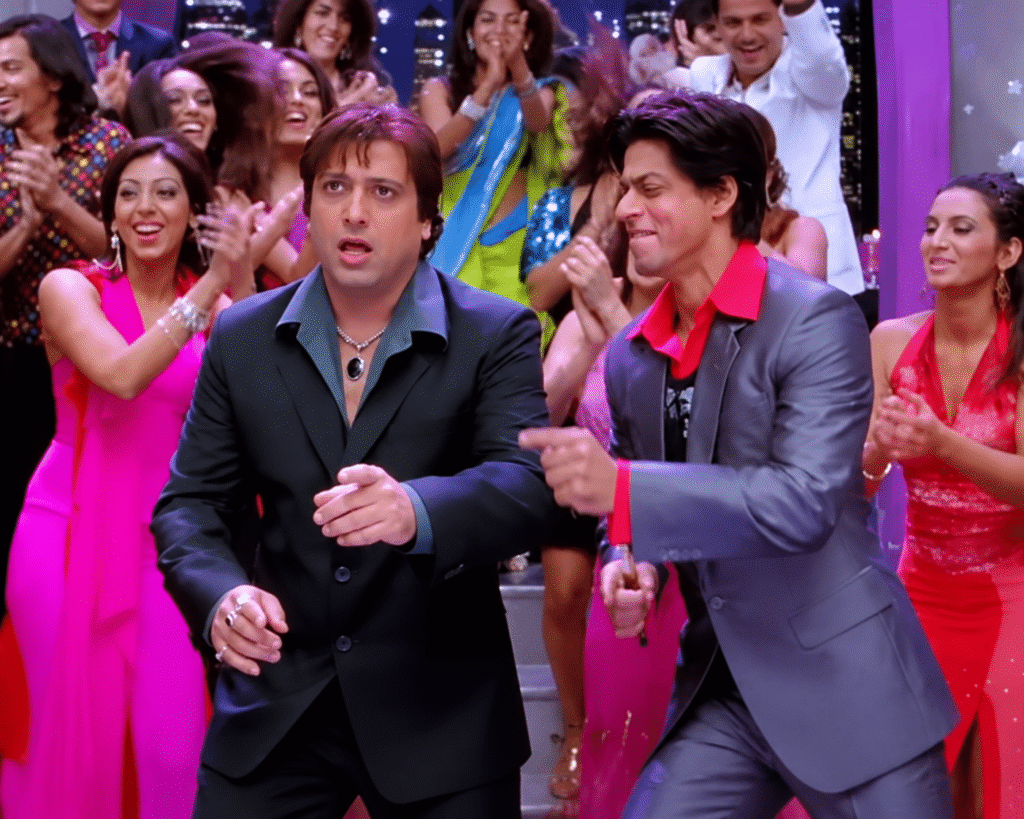
Om Shanti Om is remembered for its songs, comedy, romance, and unforgettable Bollywood moments. But beneath all of that is a message that still feels relevant.
It’s okay to have a big dream.
It’s okay if you don’t know exactly when it will happen.
It’s okay if the road takes longer than you expected.
What matters is that you keep moving while also remembering to live along the way.
Because one day, you may finally reach the place you were working towards.
And when you look back, you may realize that the award, the applause, or the success wasn’t the only thing that mattered.
You may remember the days when you had almost nothing but hope.
The people who believed in you.
The failures that made you stronger.
The small wins that kept you going.
And all those ordinary moments that slowly turned into your story.
Om started with a comb, a bottle, and a dream in front of a mirror.
Maybe all of us start somewhere like that.
We just have to be brave enough to believe in the dream, patient enough to give it time, and wise enough to enjoy the journey while we are chasing it.