Ghoomar – The Graceful Dance That Defines Rajasthan
Rajasthan — the moment we hear its name, images of vast deserts, majestic forts, royal palaces, and brave warriors come to mind. But there is another image that beautifully represents the cultural identity of the state — a woman gracefully performing Ghoomar in a traditional dress.
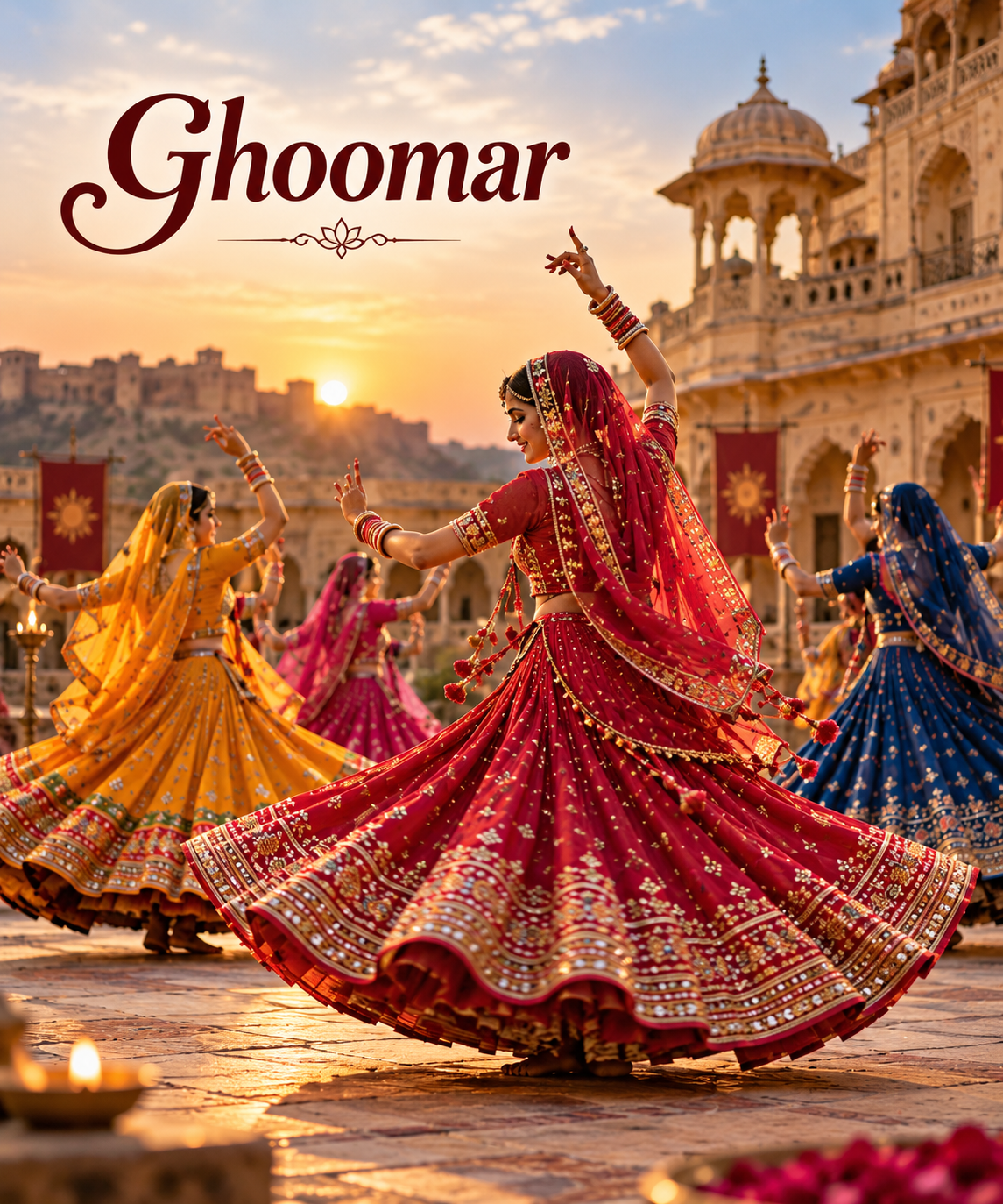
Ghoomar is one of Rajasthan’s most celebrated folk dances known for its grace, elegance, rhythmic movements, and colourful traditional attire. The dance is traditionally performed by women, who move in circular formations while gracefully twirling their long, flowing skirts, creating a mesmerizing visual spectacle.
The dance holds a special place in Rajasthan’s cultural heritage and is particularly associated with festivals, weddings, and other celebrations. It is also prominently performed during Gangaur, one of Rajasthan’s most important traditional festivals.
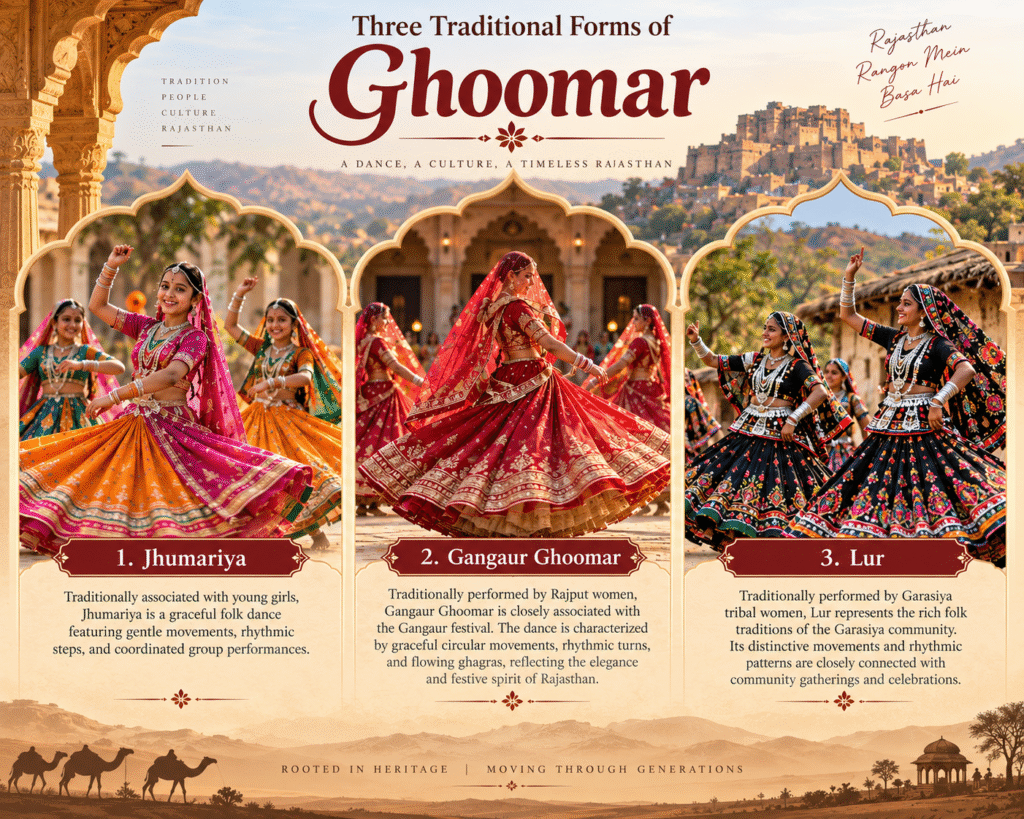
Three Traditional Forms of Ghoomar
Ghoomar is traditionally associated with different forms and communities, each adding its own character to the dance:
- Jhumariya – Traditionally associated with young girls.
- Gangaur Ghoomar– Performed by women and characterized by graceful circular movements.
- Lur – Traditionally performed by Garasiya tribal women, reflecting the folk traditions of the community.
Ghoomar is more than just a dance — it is a reflection of Rajasthan’s traditions, femininity, celebration, and royal cultural heritage. Its colourful costumes, synchronized movements, and distinctive rhythm have made it an important symbol of Rajasthan’s identity.
Ghoomar and Rajasthani Culture
The dance has also gained recognition beyond Rajasthan through Indian cinema, cultural festivals, and performances across the country. Yet, at its heart, Ghoomar remains deeply connected to the traditional communities and celebrations of Rajasthan.
Ghoomar is not simply a folk dance; it is a moving expression of Rajasthan’s cultural heritage.